Bringing Second Story to Life in Handmade Creations
I was working on a small batch of soy candles last week, and I found myself staring at the label design for hours. The words “Cozy Glow” felt flat, no matter how many times I adjusted the font. That’s when I decided to try Second Story. As soon as I applied it to the label, something clicked. The natural curves and friendly charm of this display font transformed my simple label into a warm, inviting piece that matched the scent of the candle perfectly.
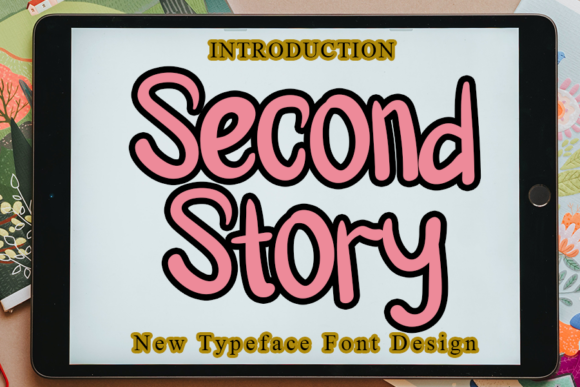
Second Story is a display font with a soul. Its gentle serifs and soft edges give it a handcrafted feel, making it perfect for anything that needs a touch of personality without being too bold or overwhelming. It feels like writing with a fountain pen on handmade paper—natural, approachable, and full of character.
A Font That Fits Any Maker’s Vision
Since discovering Second Story, I’ve been using it across a range of projects—from greeting cards to boutique packaging. It has a versatility that makes it ideal for both short phrases and longer text, though it shines brightest when used for display purposes. Whether I’m designing a holiday tag for a seasonal product or creating a welcome board for a wedding, this font adds a sense of warmth and authenticity that elevates the whole design.
One of my favorite uses has been for wedding invitations. The delicate script of Second Story pairs beautifully with a clean sans serif font for the details, creating a balance between elegance and readability. I also use it for planner pages and printable wall art, where its friendly style helps create a cozy atmosphere in any space.
Real-World Applications for Makers and Sellers
If you’re a maker or seller, you know how important the presentation of your products can be. A well-designed label or tag can make all the difference in how your items are perceived. With Second Story, I’ve created labels for my candle line that feel personal and professional. I even use it for sticker sheets and boutique tags, where its unique style helps stand out against more generic fonts.
For those who sell digital printables, Second Story is an excellent choice for templates like birthday invitations, farmhouse signs, or holiday tags. It adds a handcrafted look that customers love, especially when paired with other fonts for contrast. When I tested it on a mockup for a tote bag design, the font’s natural flow made the text feel like part of the fabric itself.
I’ve also experimented with using Second Story for mug designs and t-shirt graphics. The font works well on curved surfaces, and its legibility ensures that the message remains clear even from a distance. For smaller elements like product tags or stickers, I find that it holds up well when printed in small sizes, which is essential for cutting machines like Cricut or Silhouette.
Design Tips for Using Second Story
When working with Second Story, I recommend pairing it with a clean sans serif font for body text, such as Helvetica or Arial, to keep the overall design balanced. If you're going for a more elegant look, a simple serif font like Garamond can complement it nicely. Just be sure to test how the two fonts interact before finalizing your design.
Before selling any physical products or digital downloads that use Second Story, it's crucial to check the font’s licensing terms. Make sure it includes commercial use rights and supports the languages you plan to use. Also, take time to explore the included styles, alternates, ligatures, and swashes to get the most out of the font’s design potential.
For best results on printed materials, I suggest testing the font on different surfaces and sizes. Sometimes, a font that looks great on a computer screen may not render as clearly when printed, especially on small stickers or labels. Always do a quick mockup before committing to a large batch of prints.
Letting the Font Speak for Itself
Second Story isn’t just another font—it’s a creative tool that brings your ideas to life. Whether you’re designing a label, a card, or a printable, it adds a layer of warmth and authenticity that can transform your work. It’s the kind of font that feels like it belongs in every project, from the smallest tag to the largest banner.
As a maker, I’ve found that the right font can change the entire mood of a design. And with Second Story, I have a go-to typeface that feels like a trusted friend in my creative process. It’s simple, friendly, and full of character—just like the handmade products we all love to create and share with the world.